Azelaic Acid: The Underrated Ingredient for Redness, Acne & Dark Spots
Azelaic acid calms redness, clears acne and fades dark spots all in one step. A clear guide to how it works, who it suits, and how to use it.
Azelaic acid is a multi-tasking ingredient that calms redness, clears acne, and fades dark spots, all in one step. It suits sensitive skin, pairs safely with retinoids and vitamin C, and shows visible results in 4–8 weeks with daily use.
You've tried everything. The calming serums, the trending brighteners, the breakout treatments that promised to fix it all, but your skin still feels red, reactive, spotty, or uneven. That is exactly where azelaic acid earns its reputation.
For people who need support with redness, acne, rosacea, or dark spots, azelaic acid is one of the few ingredients that can do several jobs well at once.
What Azelaic Acid Does Azelaic acid is a multitasking skincare ingredient that helps reduce redness, calm inflammation, fight acne-causing bacteria, and fade hyperpigmentation. It is often recommended for people who want one active that can support several concerns without feeling overly harsh.
That is why azelaic acid for rosacea gets so much attention. Research shows it can improve erythema, inflammatory lesions, and overall skin clarity, especially with consistent use.
It is also a strong option for people dealing with acne and post-breakout marks. If your skin needs support rather than a stripped-back, aggressive routine, azelaic acid is one of the best ingredients to consider.
Who Azelaic Acid Helps Azelaic acid is especially useful if your skin tends to:
• Flush or look red easily.
• React to strong actives.
• Break out with acne or congestion.
• Keep dark marks after spots heal.
• Need a brightening ingredient that is less intense than some alternatives.
It is a particularly smart choice for people with rosacea-prone, acne-prone, or sensitive skin. Azelaic acid is also widely considered one of the more pregnancy-friendly brightening options, which makes it stand out in a crowded category.
Azelaic Acid vs Niacinamide If you are comparing azelaic acid vs niacinamide, the easiest way to think about it is this: niacinamide is a general skin-support ingredient, while azelaic acid is a more targeted corrective active. Niacinamide can help with barrier support, oil balance, and overall tone, but azelaic acid is usually stronger for redness, acne, and pigment concerns.
That does not mean one is "better" for everyone. If your main issue is sensitivity plus mild oiliness, niacinamide may be enough. If your main issue is redness, rosacea, breakouts, or dark spots, azelaic acid is usually the more direct choice.
Azelaic Acid vs Vitamin C for Dark Spots
When it comes to azelaic acid vs vitamin C for dark spots, both can help, but they tend to work differently. Vitamin C is usually chosen for general brightness and antioxidant support, while azelaic acid is often preferred when dark spots are tied to acne, inflammation, or redness.
If your skin is sensitive, azelaic acid can also be easier to tolerate than stronger vitamin C formulas. A lot of people actually do well using both, as long as they introduce them slowly and watch how their skin responds.
How to Use Azelaic Acid
Azelaic acid is easy to slot into a routine because it does not usually require complicated pairing rules. Many people use it once or twice a day, depending on tolerance, and daily use is what usually brings the best results over time.
A simple routine looks like this: • Cleanse.
• Apply azelaic acid.
• Follow with moisturiser.
• Use sunscreen in the morning.
If you are new to it, start with once daily or every other day, then increase if your skin is happy. Results are often seen within 4–8 weeks, but more noticeable improvements may take longer with regular use.
Azelaic Acid 10% vs 15% The azelaic acid 10% vs 15% question mostly comes down to strength and tolerance. A 10% formula is often the better starting point for beginners or sensitive skin, while 15% is usually better for people who already know they tolerate it well.
If your skin is easily irritated, there is no prize for rushing to the strongest option. A gentler formula used consistently will usually beat a stronger one that you cannot tolerate long enough to benefit from.
Side Effects and Who Should Be Careful
Like any active ingredient, azelaic acid can cause side effects, especially early on. The most common issues are mild stinging, tingling, dryness, or temporary irritation. In the clinical studies, adverse effects were often mild or transient.
You should be a little more cautious if your skin is already very compromised, or if you have difficulty tolerating most actives. In those cases, patch testing and slow introduction are the safest approach.
Best Azelaic Acid Products The best azelaic acid product is the one that fits your skin type, budget, and tolerance level. Some people do best with lightweight serums, while others prefer richer emulsions or prescription-strength formulas.
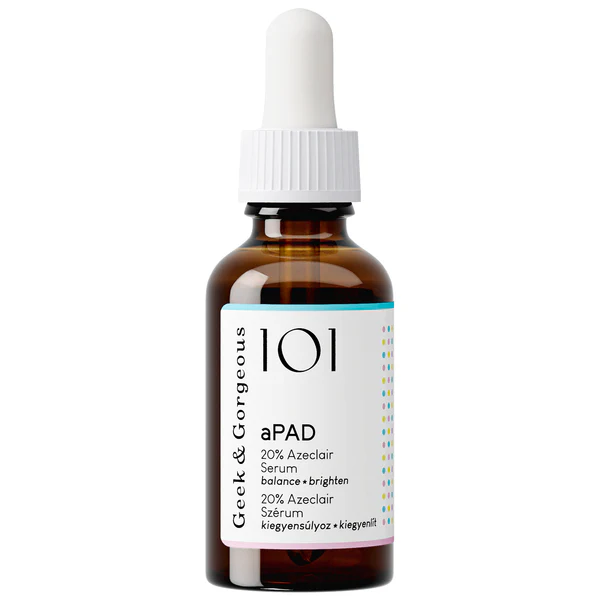
• Geek & Gorgeous aPAD 20% Azeclair Serum — A high-strength azelaic-derivative serum that targets redness, breakouts, and uneven tone in a lightweight, fragrance-free formula. Buy on Amazon: https://amzn.to/4eNd74q
Not sure if azelaic acid is right for you? Take the 2-minute quiz.
How Long Do Results Last Azelaic acid works best as part of a consistent routine, not as a one-off fix. Clinical research suggests improvements build over time, especially with ongoing use for rosacea, acne, and pigmentation concerns.
In other words, the results last as long as you keep supporting your skin and preventing the same issues from coming back.
FAQ Is azelaic acid good for rosacea? Yes. It is one of the most well-studied ingredients for rosacea-prone skin and can help reduce redness and inflammatory lesions.
Can I use azelaic acid every day? Yes, many people use it daily if their skin tolerates it well. Starting slowly is the best way to build up.
Does azelaic acid help acne marks? Yes. It can help fade post-acne marks and support a more even skin tone over time.
Is azelaic acid better than niacinamide? They do different jobs. Azelaic acid is usually more targeted for redness, acne, and pigmentation.
Can I use azelaic acid with vitamin C? Yes, many routines can include both, especially if introduced carefully.
Should I use 10% or 15% azelaic acid? If you are new or sensitive, 10% is usually the safer starting point. If you already tolerate azelaic acid well, 15% may be a stronger option.
Find your perfect skincare routine
Answer a few questions and we'll tailor Radiant Eden's picks to you.
Build my skincare routineKeep reading

Closed Comedones and Clogged Pores: What Helps and What Makes Them Worse
Learn what helps closed comedones and clogged pores, which active ingredient to choose and which common skincare habits can make bumps worse.
Dry Skin vs Dehydrated Skin: How to Tell the Difference
Learn how to distinguish dry skin from dehydrated skin, identify common triggers and choose a simple routine that restores comfort.
How to Layer Skincare Ingredients: A Simple Morning and Evening Guide
Learn the correct order for vitamin C, azelaic acid, retinoids, exfoliating acids, moisturiser and sunscreen without overwhelming your skin.