
Dry Skin vs Dehydrated Skin: How to Tell the Difference
Understand whether your skin needs more oil, better water retention or a gentler barrier-supporting routine.

Learn how to distinguish dry skin from dehydrated skin, identify common triggers and choose a simple routine that restores comfort.
Editor's shortlist


Dry and dehydrated skin can both feel tight, rough or uncomfortable, but they are not quite the same.
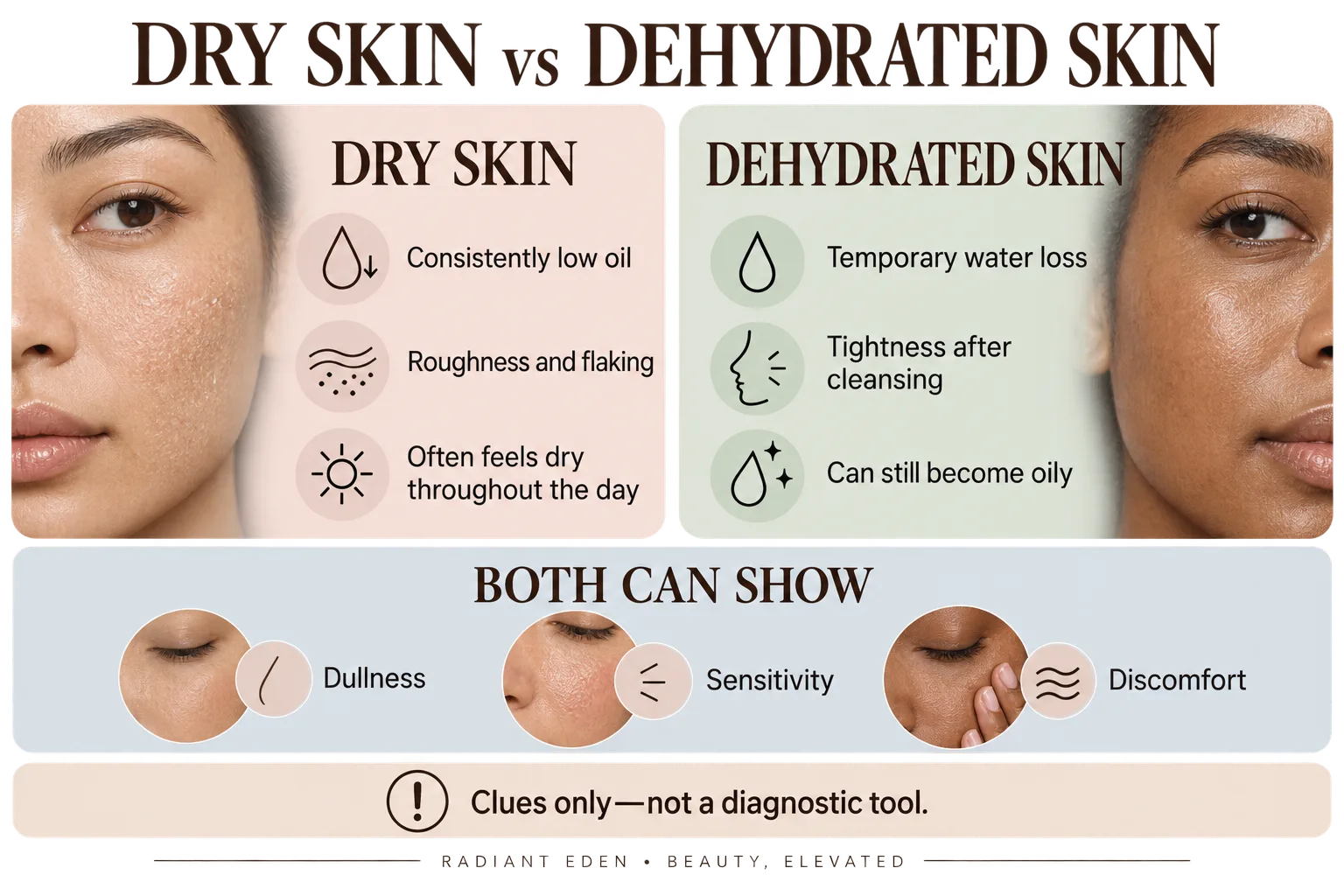
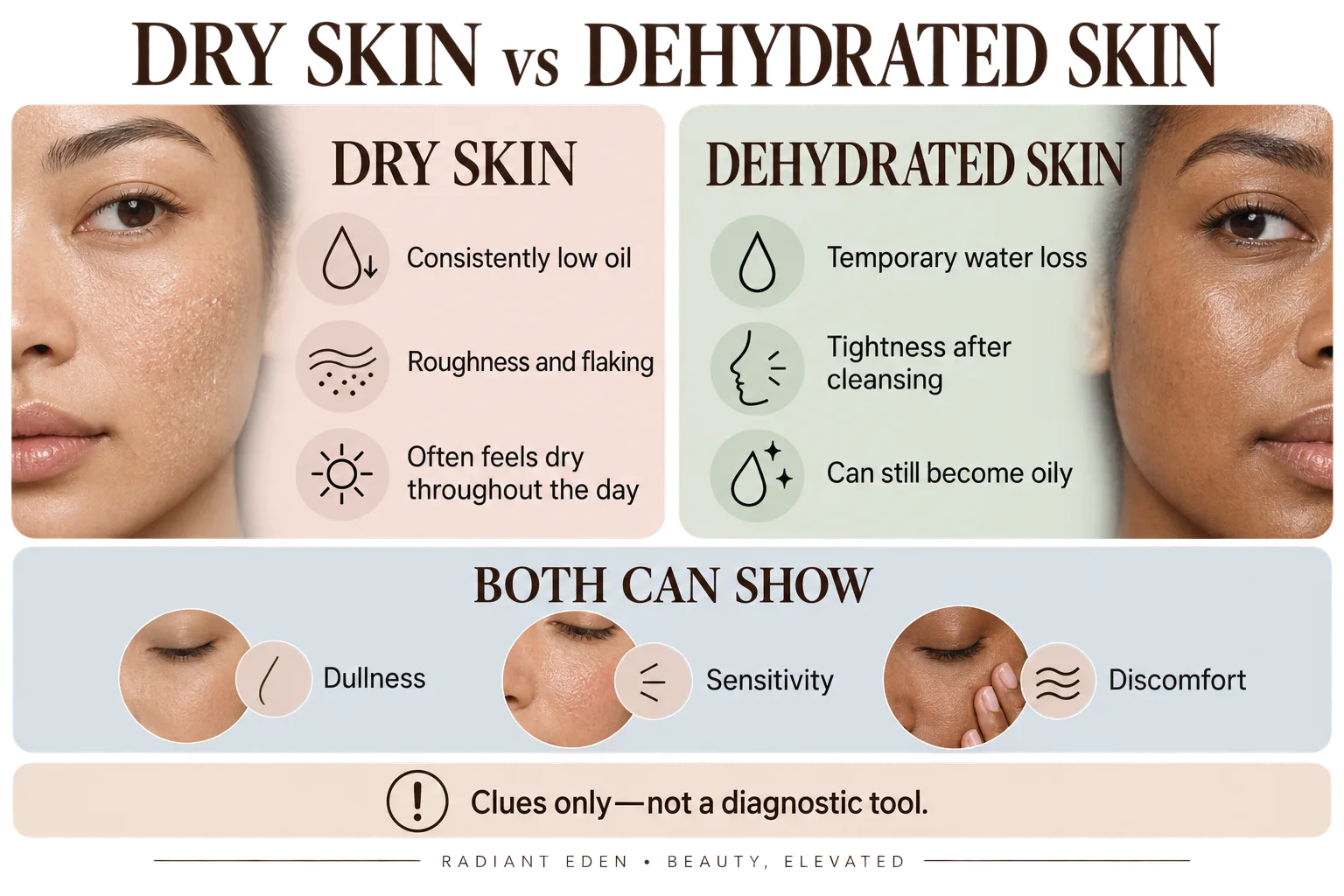
Dry skin usually lacks enough oil and barrier lipids. Dehydrated skin lacks water in its outer layer. You can have naturally oily skin and still experience dehydration and many people have signs of both.
The Quick Difference
Dry skin
Dry skin often:
- Feels dry most of the time, not only after cleansing.
- Produces relatively little oil.
- Looks rough, flaky or dull.
- Feels uncomfortable in cold weather.
- Benefits from creams containing emollient and barrier-supporting ingredients.
Dryness may be your usual skin type, but it can also develop because of ageing, weather, frequent washing, irritating products or a skin condition.
Dehydrated skin
“Dehydrated skin” is a cosmetic description rather than a separate medical diagnosis. It means that the outer layer of your skin is not retaining enough water.
It may:
- Feel tight immediately after cleansing.
- Look temporarily dull or creased.
- Become oily while still feeling uncomfortable.
- Sting when products are applied.
- Change after over-cleansing, excessive exfoliation, cold weather or low humidity.
Skin can therefore be oily and dehydrated at the same time.
A Simple At-Home Check
Think about how your skin behaves throughout the day.
If it rarely becomes oily and regularly feels rough or flaky, dryness is probably the main concern.
If it becomes shiny but still feels tight, particularly after cleansing, dehydration or barrier disruption may be contributing.
If your skin burns, stings, peels or suddenly reacts to familiar products, the issue may be more than simple dehydration. Read How to Repair a Damaged Skin Barrier.
Do not rely on the popular “pinch test”. It cannot reliably diagnose your facial skin type or tell you which products you need.
What Causes Dehydrated-Looking Skin?
Common triggers include:
- Foaming or harsh cleansers.
- Very hot water.
- Cleansing too frequently.
- Introducing several active ingredients together.
- Overusing exfoliating acids, scrubs or retinoids.
- Cold weather, central heating or air conditioning.
- Using a hydrating serum without a moisturiser to reduce water loss.
Drinking enough fluid is important for your general health, but drinking extra water is not a reliable treatment for dry skin. A systematic review found only limited evidence that increasing water intake improves skin hydration in otherwise healthy people.
The Best Routine for Dry Skin
Morning
- Rinse or use a gentle cream cleanser.
- Apply an optional hydrating serum.
- Use a cream moisturiser.
- Finish with broad-spectrum SPF 30 or higher.
Evening
- Cleanse gently.
- Apply moisturiser while the skin is slightly damp.
- Add a thin layer of an ointment or balm to particularly dry areas if needed.
Look for ingredients such as glycerin, ceramides, squalane, fatty acids, cholesterol or petrolatum. Creams and ointments usually reduce water loss more effectively than very light gels.
The Best Routine for Dehydrated Skin
The aim is not simply to add more serums. It is to reduce the cause of water loss.
Morning
- Rinse or cleanse gently.
- Apply a simple hydrating serum if desired.
- Seal it in with a suitable moisturiser.
- Apply sunscreen.
Evening
- Use a mild cleanser.
- Pause unnecessary exfoliation.
- Apply moisturiser to slightly damp skin.
If your skin is oily or acne-prone, choose a lightweight gel-cream rather than skipping moisturiser completely. Ingredients such as glycerin, panthenol, hyaluronic acid and beta-glucan can support hydration, but they still need a comfortable moisturiser around them.
What Should You Avoid?
Until your skin feels comfortable, reduce or pause:
- Scrubs and cleansing brushes.
- Strong exfoliating acids.
- Multiple active treatments in one routine.
- Fragranced products if they sting.
- Hot water and long cleansing routines.
A complicated routine will not necessarily hydrate your skin faster. Start with cleanser, moisturiser and sunscreen, then add other products one at a time. See How to Layer Skincare Ingredients for a simple product order.
When to Seek Professional Advice
Speak to a pharmacist, GP or dermatologist if your skin is persistently painful, intensely itchy, cracked, bleeding, swollen or weeping, or if you develop a spreading rash or signs of infection.
Persistent dryness can sometimes be associated with eczema, contact dermatitis or another condition that requires more than cosmetic skincare.
The Quick Verdict
Choose a richer cream or ointment when your skin consistently lacks oil, feels rough and rarely becomes shiny.
Choose a gentle, simplified routine with a suitable moisturiser when your skin is oily but tight, suddenly uncomfortable or dehydrated after overusing active products.
If you cannot decide, treat the skin gently first. A mild cleanser, moisturiser and daily sunscreen will support both concerns while you observe how your skin responds.
Sources
- American Academy of Dermatology: Dry Skin—Signs and Symptoms
- American Academy of Dermatology: How to Pick the Right Moisturizer
- NHS: Emollients
- PubMed: Does Dietary Fluid Intake Affect Skin Hydration?
- PubMed: Skin Hydration—A Review of Its Molecular Mechanisms
This article provides general information and is not a diagnosis. Seek professional advice for persistent or severe symptoms.
Related products
Frequently asked
Can oily skin be dehydrated?+
Does drinking more water fix dehydrated skin?+
How can I tell if my skin barrier may be damaged?+
Should I use a gel or cream moisturiser?+
Find your perfect skincare routine
Answer a few questions and we'll tailor Radiant Eden's picks to you.
Build my skincare routineKeep reading
How to Build a Simple Skincare Routine for Your Skin Type
Build a simple skincare routine with the right cleanser, treatment, moisturiser and sunscreen for dry, oily, combination or sensitive skin.

How to Repair a Damaged Skin Barrier: Signs, Causes and a Gentle Routine
Learn the signs of a damaged skin barrier, what causes tightness, stinging, flaking and redness, and how to build a gentle recovery routine.

How to Layer Skincare Ingredients: A Simple Morning and Evening Guide
Learn the correct order for vitamin C, azelaic acid, retinoids, exfoliating acids, moisturiser and sunscreen without overwhelming your skin.