Why Your Hair Mask Leaves Your Hair Coated, Greasy or Still Dry
How to match the mask, amount and technique to your strand thickness, porosity and damage.

Find out why a hair mask can leave your hair coated, greasy, flat or still dry—and how to adjust the product, amount and technique.
Editor's shortlist


A hair mask should leave your hair softer and easier to manage. If it feels coated, greasy, flat or just as dry afterwards, the product is not necessarily bad—you may be using the wrong weight, too much product or the wrong treatment for your hair’s condition.
Choose masks according to strand thickness, porosity and damage, not whether your hair is straight, wavy, curly or coily.
If Your Hair Feels Coated or Greasy
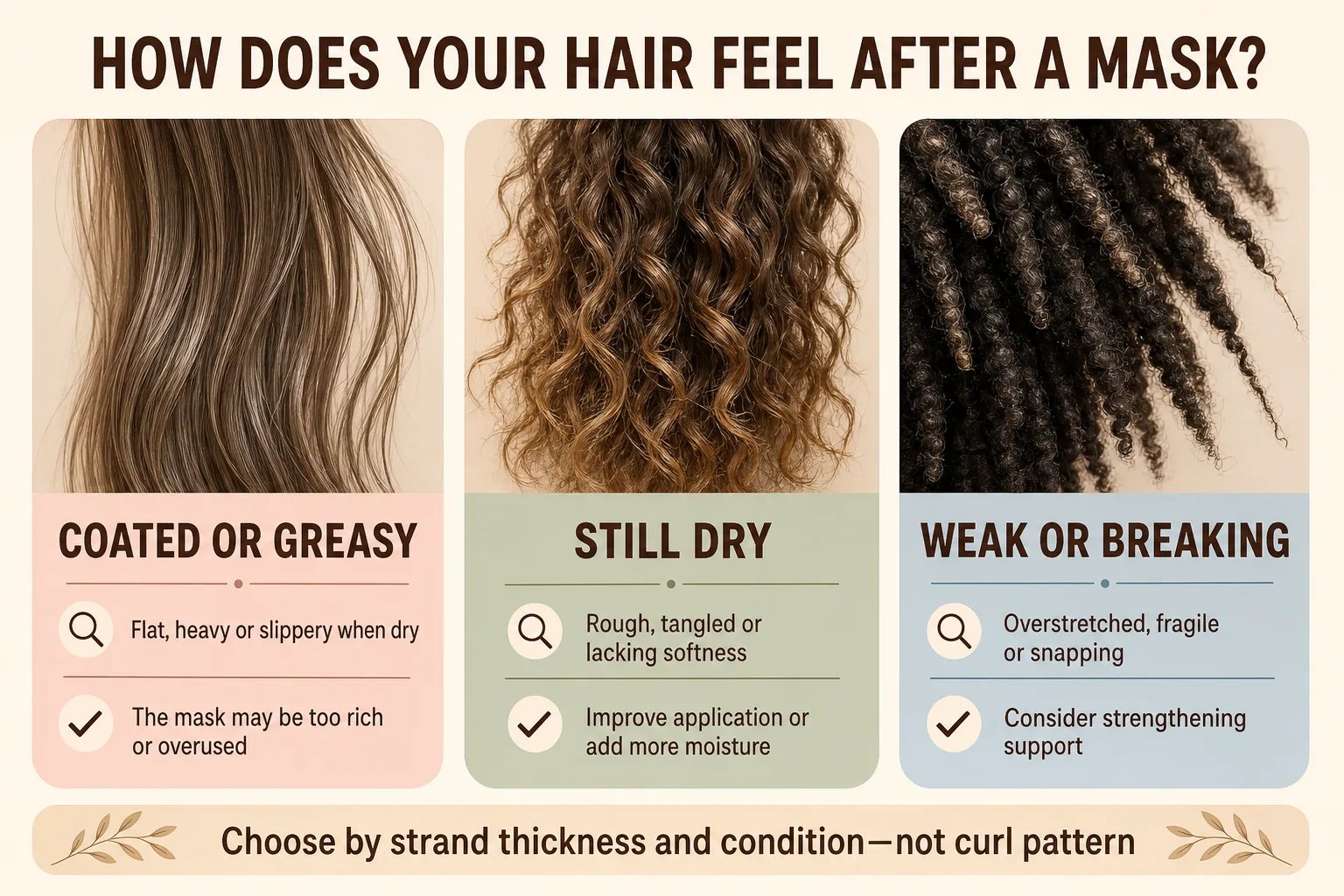
The mask may be too rich for your strands. Fine and low-porosity hair can become overwhelmed by concentrated butters, oils and conditioning ingredients, particularly when several rich products are layered together.
Other common causes include:
- Applying too much product.
- Using a mask and conditioner in the same wash.
- Applying the mask close to an oily scalp.
- Leaving it on much longer than instructed.
- Not rinsing thoroughly.
- Using rich masks too frequently.
- Build-up from oils, silicones, stylers or dry shampoo.
Start by reducing the amount and applying it only from the mid-lengths to the ends. Unless the label says otherwise, use a rinse-out mask instead of conditioner, not as an additional step.
If your hair already feels coated, wash it thoroughly before using another treatment. Living Proof Clarifying Detox Shampoo can help remove stubborn product and hard-water build-up, but it does not need to be used at every wash.
If Your Hair Still Feels Dry
A mask cannot compensate for every source of dryness. The formula may not be moisturising enough, but the problem may also be caused by:
- A shampoo that is too strong for frequent use.
- Applying the mask to hair that is not wet enough.
- Using too little product on dense or coarse hair.
- Rinsing before the recommended treatment time.
- Ongoing heat, bleach or chemical damage.
- Rough detangling and friction.
- Split or severely degraded ends that need trimming.
Apply the mask evenly to wet hair in sections. Concentrate on the driest lengths and leave it on for the time stated on the label.
Dry, porous, medium-to-coarse hair may need a richer formula such as Olaplex Rich Hydration Mask. Fine hair should begin with a small amount because this mask can reduce volume.
Your Hair May Need Strength Rather Than More Moisture
Hair that feels soft but weak, overstretched or prone to snapping may need strengthening support rather than another rich moisturising mask.
Redken Acidic Bonding Concentrate 5-Minute Liquid Mask is a useful option when chemically or heat-damaged hair needs both conditioning and strengthening support.
Do not assume that more protein or bond repair is always better. If your hair becomes unusually stiff, rough or difficult to style, reduce the frequency and return to a simple moisturising conditioner.
Fine Hair May Prefer Conditioner
Fine hair does not always need a weekly mask. A lightweight rinse-out conditioner at every wash, with an occasional mask when the hair feels unusually dry or damaged, is often a better approach.
If a mask repeatedly leaves your roots flat or your lengths coated, that is useful information. You may simply need a lighter conditioning product rather than a different “weightless” mask.
A Better Way to Use Your Hair Mask
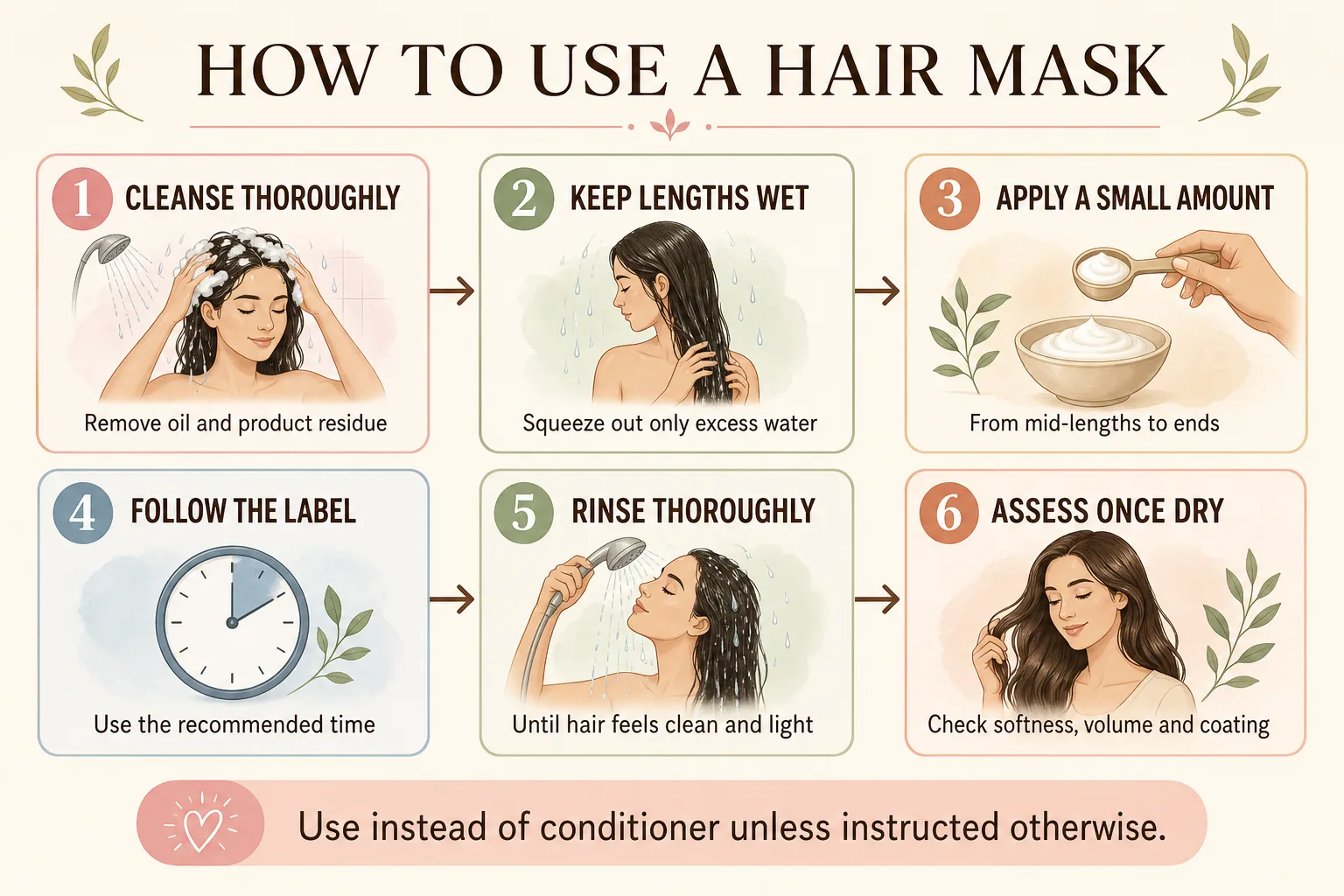
- Cleanse thoroughly so the mask can reach the hair evenly.
- Remove excess dripping water, but keep the hair wet.
- Apply a small amount to the mid-lengths and ends.
- Add more only where necessary.
- Leave it on for the recommended time.
- Rinse thoroughly.
- Assess your hair after it has dried—not only while it feels slippery in the shower.
If your hair feels soft, light and manageable, the amount and frequency are probably right. If it feels coated, use less or switch to conditioner. If it remains dry, try a richer moisturising treatment or review the rest of your routine.
The Quick Verdict
- Coated or greasy: use less product, mask less often and clarify when needed.
- Flat or heavy: choose conditioner most washes, especially for fine hair.
- Still dry: improve application and consider a richer moisturising mask.
- Weak or breaking: consider a strengthening or bond-supporting treatment.
- Dry and damaged: alternate moisture and repair instead of layering everything together.
Build a routine around your scalp, strand thickness, porosity and damage level with the Radiant Eden Hair Routine Quiz.
Related products
Frequently asked
Why does my hair feel greasy after using a mask?+
Should I use conditioner after a hair mask?+
Why is my hair still dry after a hair mask?+
How often should fine hair use a mask?+
Find your perfect haircare routine
Answer a few questions and we'll tailor Radiant Eden's picks to you.
Build my haircare routineKeep reading

Protein or Moisture? How to Choose the Right Hair Mask
Learn whether your hair needs a protein, moisturising or balanced mask, with practical recommendations for different strands and damage levels.

Best Hair Masks for Dry, Low-Porosity Hair Without Heavy Build-Up
Find the best lightweight masks for dry, low-porosity hair, with options for fine, medium and coarse strands that rinse away cleanly.
Best Hair Masks for Bleached and Chemically Damaged Hair
Choose the right mask for bleached or chemically damaged hair, with targeted options for breakage, dryness, porosity and fine strands.

Best Conditioners for Fine Hair That Gets Weighed Down
Discover lightweight conditioners for fine hair, plus two occasional masks for dryness or damage, without sacrificing softness, movement or volume.