Adult Acne Skincare Routine: What to Use and What to Avoid
A practical morning-and-evening routine for clogged pores, hormonal breakouts and inflamed spots without overwhelming the skin.
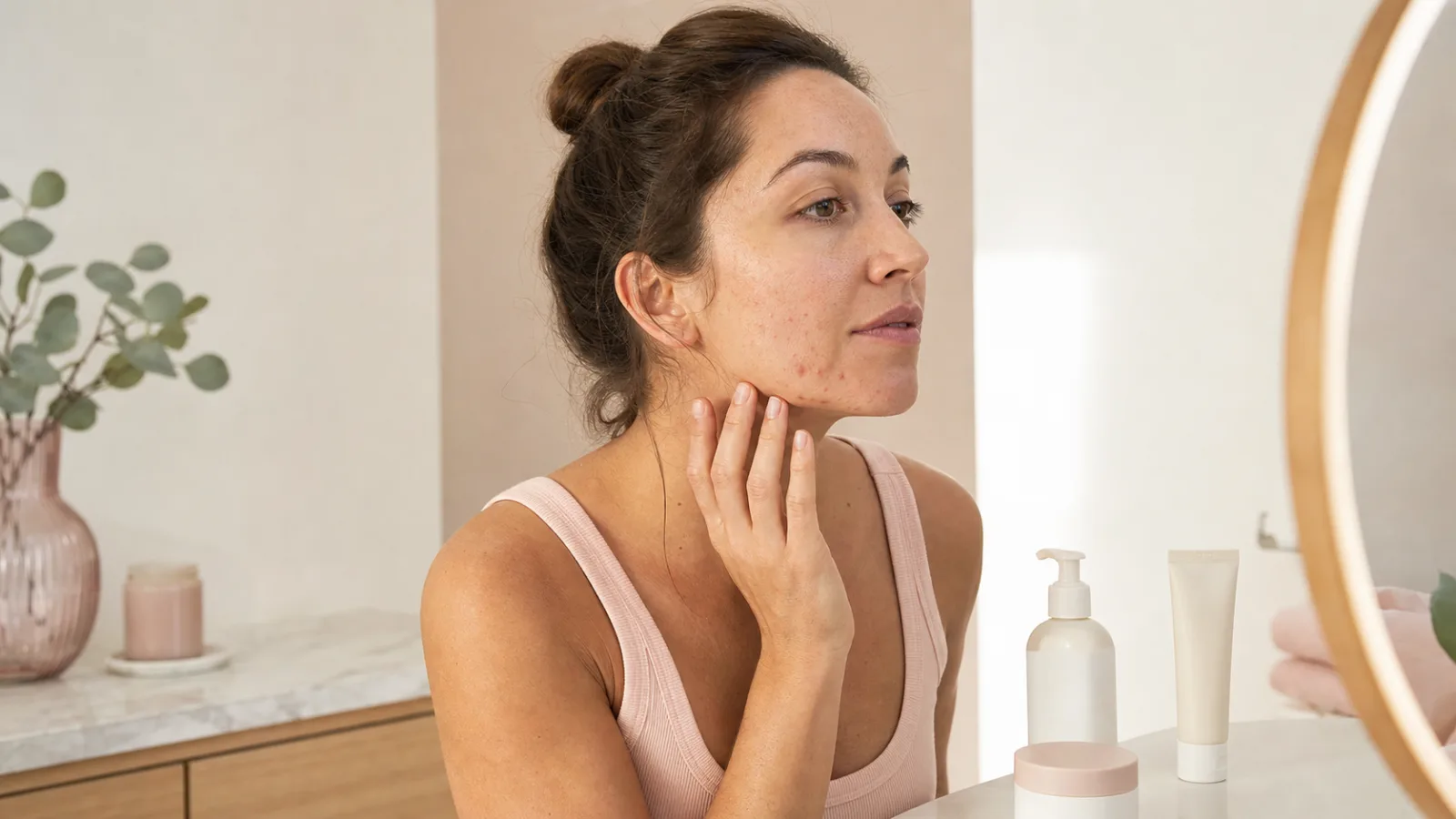
Build a simple adult-acne routine for clogged pores, hormonal breakouts and inflamed spots using benzoyl peroxide, salicylic acid, retinoids or azelaic acid.
Adult acne can be particularly frustrating. Your skin may feel drier or more sensitive than it did as a teenager, yet you are still dealing with clogged pores, inflamed spots or recurring breakouts around the chin and jawline.
The answer is rarely to use more products. An effective adult-acne routine usually needs:
- Gentle cleansing
- One carefully chosen acne treatment
- A non-comedogenic moisturiser
- Daily sunscreen
- Enough time to work
The goal is to treat acne without creating the tightness, stinging and flaking associated with an irritated skin barrier.
This guide is educational and cannot diagnose acne or replace personalised medical advice.
First, Identify the Kind of Breakout You Have
Different acne treatments work on different parts of the acne process. Start by identifying your main concern rather than applying every active ingredient at once.
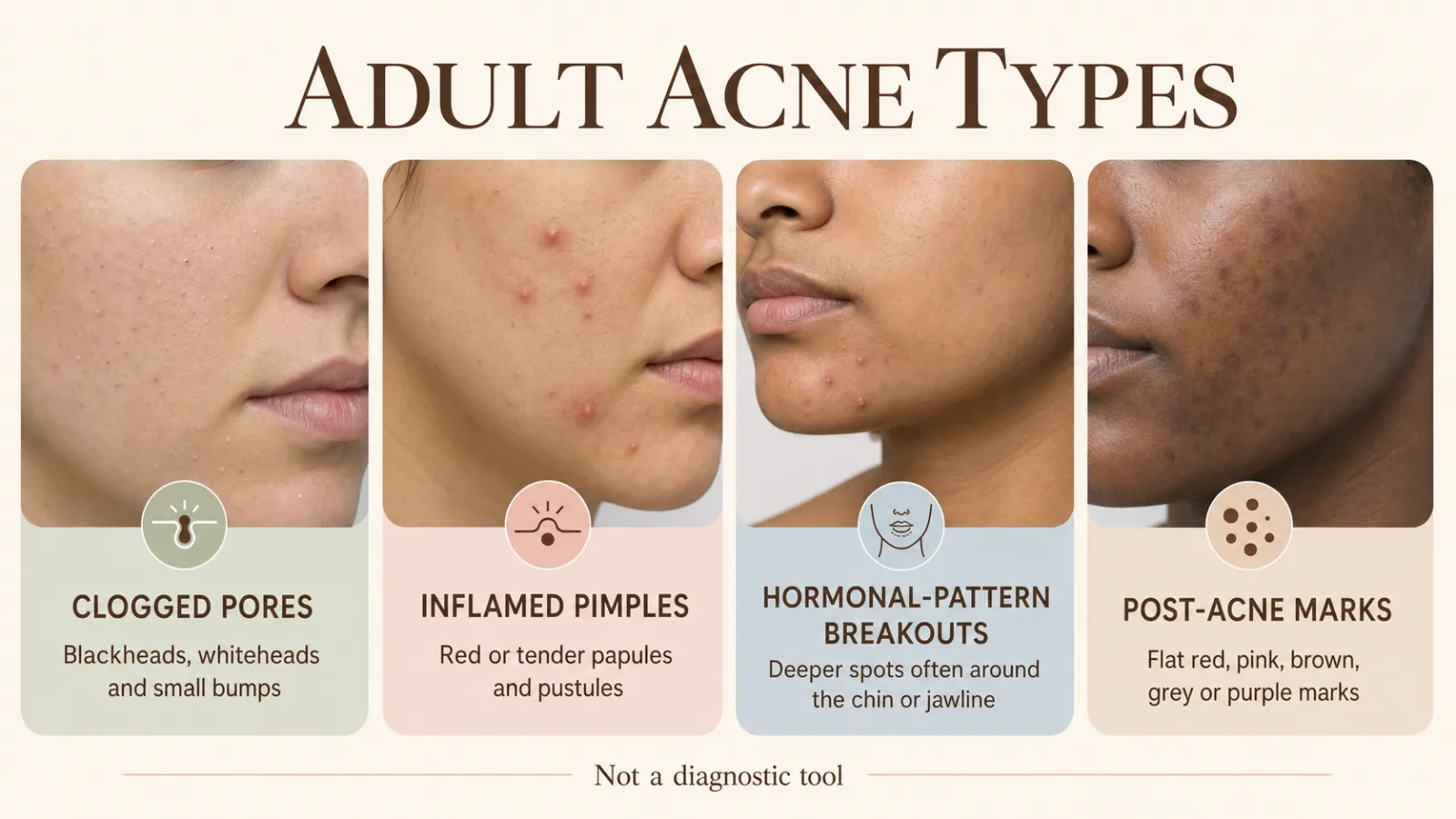
Blackheads, Whiteheads and Small Clogged Bumps
These form when oil and dead skin cells collect inside a pore. Salicylic acid and topical retinoids are commonly used because they help keep pores clear.
Red, Inflamed Pimples
Benzoyl peroxide can be particularly useful for mild inflammatory spots because it reduces acne-associated bacteria. Azelaic acid may also help with inflammation and the marks left after spots heal.
Deep, Painful or Recurring Lower-Face Breakouts
Tender spots around the chin, jawline and neck, especially when they follow a menstrual pattern, may have a hormonal component. Skincare can still help, but persistent hormonal acne sometimes needs prescription treatment.
Flat Marks Left After Acne
Brown, grey or purple marks are usually post-inflammatory hyperpigmentation rather than active acne. Pink or red marks may be post-inflammatory erythema.
They do not need to be “dried out”. Preventing new breakouts and protecting the skin from sunlight are central to helping them fade. Read the complete guide to post-acne dark spots.
The Most Important Rule: Choose One Main Active
Benzoyl peroxide, salicylic acid, retinoids and azelaic acid can all be helpful, but you do not need to begin with all four.
Choose the ingredient that best matches your main concern. Use it consistently for several weeks before deciding whether to add something else.
The American Academy of Dermatology advises giving a non-prescription acne treatment approximately six to eight weeks before judging the result. NICE commonly recommends reviewing first-line acne treatment at around 12 weeks (American Academy of Dermatology; NICE).
A Simple Morning Routine for Adult Acne
Step 1: Cleanse Gently
Use a mild, fragrance-free or low-fragrance cleanser that removes oil, sweat and your evening products without leaving the skin tight.
If your skin is dry or easily irritated, rinsing with lukewarm water may be sufficient on some mornings. Avoid very hot water and rough cleansing brushes.
Step 2: Apply Your Chosen Morning Treatment
Choose one treatment rather than layering everything together.
Benzoyl Peroxide
Best suited to red, inflamed pimples.
A lower-strength product can be effective while causing less irritation than a stronger formula. The American Academy of Dermatology recommends beginning with 2.5% when possible.
It may be used as a wash, a thin leave-on layer or a short-contact treatment that is rinsed away. Follow the product or prescription instructions.
Benzoyl peroxide can cause dryness, peeling or stinging and may bleach towels, pillowcases, clothing and hair.
Azelaic Acid
A useful option when acne occurs alongside redness, sensitivity or post-acne dark marks.
Azelaic acid helps keep pores clear, reduces inflammation and can support the fading of post-inflammatory pigmentation. The NHS notes that it is often used when benzoyl peroxide or topical retinoids are too irritating (NHS).
If you use a retinoid at night, azelaic acid may eventually be used in the morning—but introduce the products separately and only combine them if your skin is comfortable.
Step 3: Moisturise
Acne-prone skin still needs moisturiser. Moisturising can make acne treatments easier to tolerate consistently.
Look for a product labelled non-comedogenic. A lightweight lotion may suit oily skin, while dry or irritated skin may need a cream. Fragrance-free formulas can be useful when skin is sensitive.
Step 4: Apply Sunscreen
Use a broad-spectrum, non-comedogenic sunscreen with at least SPF 30 every morning.
Sunscreen helps protect sensitive skin and reduces the chance that post-acne marks will become darker or remain visible for longer. Apply a generous, even layer and reapply when needed.
A Simple Evening Routine for Adult Acne
Step 1: Remove Sunscreen and Makeup
A single gentle cleanser may be enough. If you wear water-resistant sunscreen or heavier makeup, use a fragrance-free cleansing oil or balm first, followed by your normal cleanser.
Double cleansing is optional. It should not leave your skin feeling stripped.
Step 2: Apply One Evening Treatment
A Topical Retinoid
Retinoids such as adapalene help prevent clogged pores and can treat blackheads, whiteheads and inflamed spots. They may also improve post-acne pigmentation over time.
Apply a small amount across the acne-prone area, not only to individual spots, unless your prescriber instructs you differently.
To reduce irritation:
- Apply it to clean, completely dry skin.
- Begin two or three nights a week.
- Use approximately a pea-sized amount for the whole face.
- Avoid the eyelids, corners of the nose and lips.
- Follow with moisturiser.
You can also apply moisturiser before and after the retinoid if your skin is easily irritated.
Do not use topical retinoids during pregnancy or while planning a pregnancy. Discuss suitable alternatives with a pharmacist, GP or dermatologist (NICE).
Salicylic Acid
Salicylic acid is most useful for blackheads, whiteheads and congestion because it exfoliates inside oily pores.
It is available in cleansers and leave-on liquids. A cleanser may be easier to tolerate because it spends less time on the skin.
Start once or twice a week. Avoid immediately layering it with a retinoid, exfoliating toner or strong benzoyl-peroxide treatment.
Azelaic Acid
Azelaic acid can be used in the evening instead of a retinoid. It may be a practical choice for sensitive, redness-prone or pigmentation-prone skin.
Begin once daily or every other day if your skin stings easily, then adjust according to the product instructions and your skin’s response.
Step 3: Moisturise
Finish with a simple non-comedogenic moisturiser.
If your skin becomes sore, shiny-tight, persistently red or uncomfortable, pause your acne active and use a basic cleanser, moisturiser and sunscreen until it settles.
Which Acne Ingredient Should You Choose?
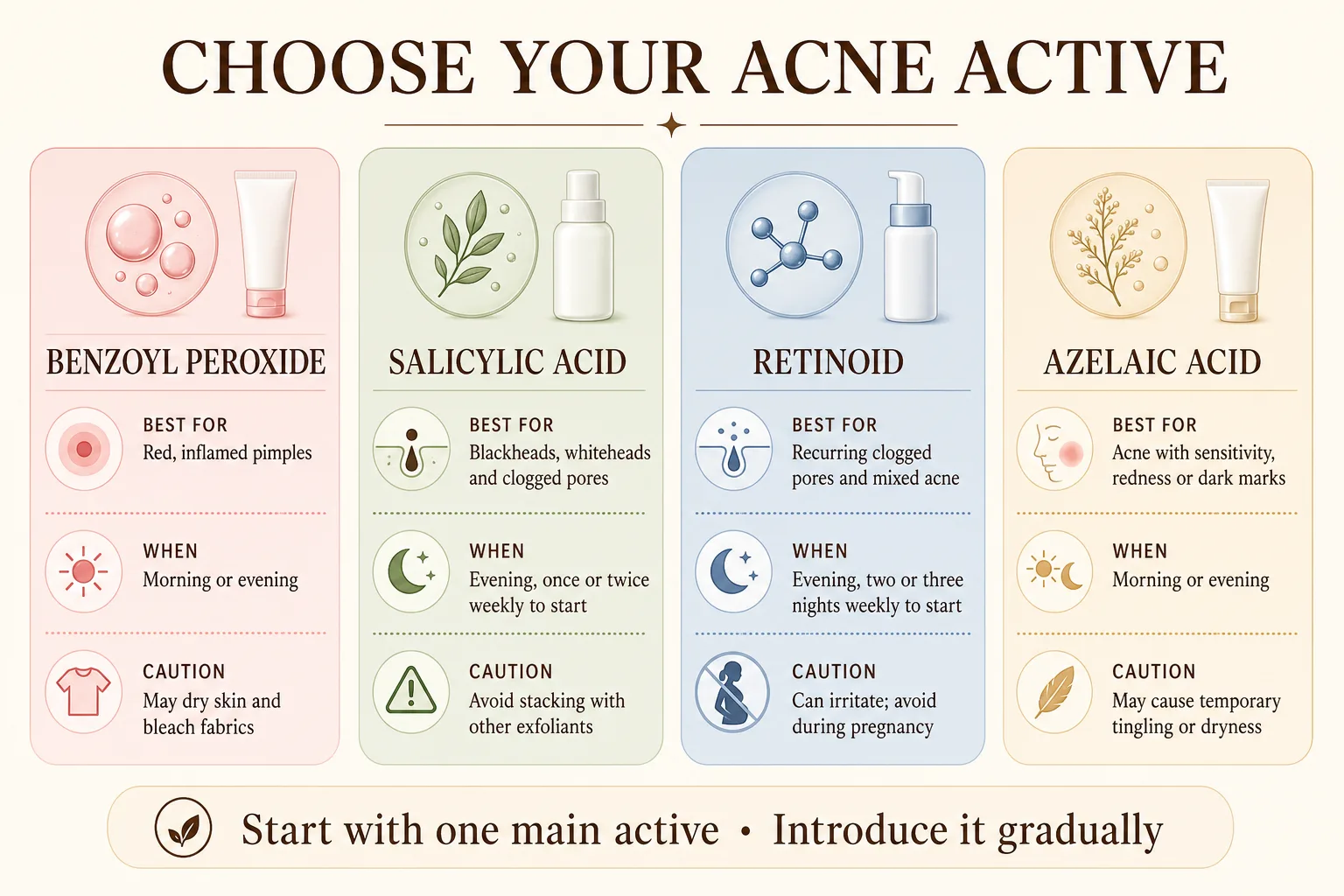
Benzoyl Peroxide
Best for red, inflamed pimples. Begin with a lower strength or short-contact use. The main cautions are dryness, irritation and bleaching of fabrics.
Salicylic Acid
Best for blackheads, whiteheads and oily congestion. Start once or twice weekly and avoid stacking it with other exfoliants.
Topical Retinoid
Best for recurrent clogged pores and mixed acne. Begin two or three evenings weekly. It can cause irritation and must be avoided during pregnancy or while planning a pregnancy.
Azelaic Acid
Best for acne with sensitivity, redness or dark marks. Begin once daily or every other day. Temporary tingling, itching or dryness can occur.
Routine Options by Breakout Type
Mostly Clogged Pores
Morning: gentle cleanser, moisturiser and sunscreen.
Evening: cleanser, salicylic acid once or twice weekly or a retinoid on selected nights, followed by moisturiser.
Do not introduce salicylic acid and a retinoid at the same time.
Mostly Inflamed Pimples
Morning: gentle cleanser, low-strength benzoyl peroxide, moisturiser and sunscreen.
Evening: cleanser and moisturiser.
Once your skin is comfortable with benzoyl peroxide, a clinician may recommend adding a retinoid or another treatment.
Sensitive Skin With Acne and Dark Marks
Morning: rinse or cleanse gently, azelaic acid if tolerated, moisturiser and sunscreen.
Evening: gentle cleanser and moisturiser.
This deliberately simple routine may be more effective than repeatedly irritating the skin with exfoliants.
Recurring Hormonal-Pattern Breakouts
Use a basic acne routine, but consider professional advice if you repeatedly develop deep or painful spots around the jawline, chin or neck.
Prescription options may include hormonal treatments for suitable patients, but these require an individual health assessment (American Academy of Dermatology).
What to Avoid When Treating Adult Acne
Starting Several Treatments at Once
If you begin benzoyl peroxide, salicylic acid and a retinoid in the same week, irritation is likely, and you will not know which product caused it. Introduce one treatment at a time.
Scrubbing the Skin
Acne is not caused by dirty skin. Grainy scrubs, rough cloths and cleansing brushes can worsen inflammation and damage the skin barrier.
Picking or Squeezing
Picking increases inflammation and the risk of scarring and post-inflammatory marks. A hydrocolloid patch can help protect a surface spot from touching, but it will not treat deep acne.
Applying Toothpaste, Lemon Juice or Undiluted Essential Oils
These are not evidence-based acne treatments and can cause irritation or burns.
Using a New Routine Every Week
Acne treatment requires consistency. Changing products too quickly can create a cycle of irritation without giving any one treatment enough time to work.
Using Topical Antibiotics by Themselves
Topical antibiotics should be prescribed and used as directed. Dermatology guidelines recommend combining antibiotics with benzoyl peroxide or another appropriate acne treatment to help limit antibiotic resistance (American Academy of Dermatology).
Treating Every Mark as Active Acne
Flat red, brown, grey or purple marks may remain after the blockage and inflammation have resolved. Repeatedly applying strong spot treatments can irritate the area without making the mark disappear faster.
How to Introduce an Acne Routine Without Overwhelming Your Skin
Weeks 1 and 2: Establish the Basics
Use only a gentle cleanser, moisturiser and sunscreen. Make sure these products feel comfortable before adding an active.
Weeks 3 and 4: Add One Treatment
Choose benzoyl peroxide, salicylic acid, a topical retinoid or azelaic acid.
Use it every other day, two or three times a week, or as directed. NICE advises that short-contact or alternate-day application can reduce irritation from treatments such as benzoyl peroxide and retinoids.
Weeks 5 to 8: Adjust Gradually
If your skin is comfortable, slowly increase usage according to the product instructions.
If you develop persistent burning, swelling, severe peeling or a rash, stop the product and seek professional advice.
Around Week 12: Review Your Progress
Ask whether new breakouts are less frequent, existing spots are healing more quickly and the treatment is tolerable. Treatment should be reassessed if it is not helping or you are developing scars or persistent pigmentation.
When to Speak to a Pharmacist, GP or Dermatologist
Seek professional advice if:
- You have deep, painful nodules or cysts
- Acne is causing scars
- Breakouts cover large areas of the face, chest or back
- A consistent routine has not helped after approximately 12 weeks
- Acne is having a significant effect on your mental health
- You are pregnant, breastfeeding or planning a pregnancy
- Acne begins suddenly alongside irregular periods or increased facial or body hair
- You are uncertain whether the bumps are acne, rosacea, folliculitis or another condition
Sudden adult acne accompanied by irregular periods or excess hair may warrant assessment for an underlying hormonal condition (NHS).
Your Adult-Acne Routine at a Glance
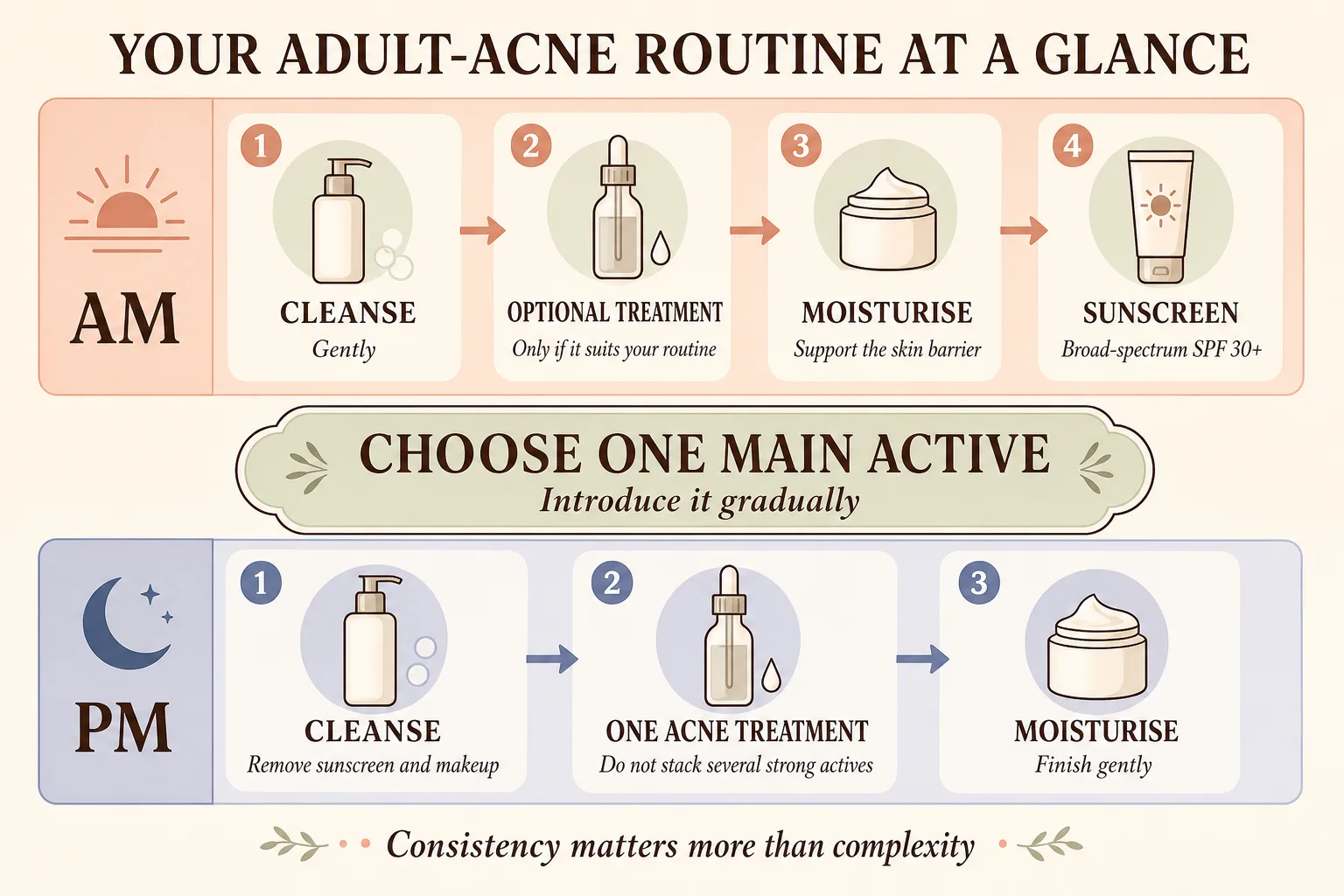
Morning
- Gentle cleanse
- One suitable treatment, if needed
- Non-comedogenic moisturiser
- Broad-spectrum sunscreen
Evening
- Remove sunscreen and makeup
- Cleanse gently
- Apply one acne treatment
- Moisturise
The best routine is not the one with the most active ingredients. It is the one you can use consistently without leaving your skin chronically irritated.
*Need help choosing the right routine? Take the Radiant Eden Skin Routine Quiz to match your products to your skin type, sensitivity and main concerns.*
Sources
Related products


Frequently asked
Can I use benzoyl peroxide and a retinoid together?+
Is salicylic acid or benzoyl peroxide better for adult acne?+
Can I use azelaic acid every day?+
Should I moisturise oily, acne-prone skin?+
Does hormonal acne need different treatment?+
Can I treat acne during pregnancy?+
Will using more active ingredients clear acne faster?+
When should I seek professional help for adult acne?+
Find your perfect skincare routine
Answer a few questions and we'll tailor Radiant Eden's picks to you.
Build my skincare routineKeep reading

How to Repair a Damaged Skin Barrier: Signs, Causes and a Gentle Routine
Learn the signs of a damaged skin barrier, what causes tightness, stinging, flaking and redness, and how to build a gentle recovery routine.
The Best Routine for Hyperpigmentation and Post-Acne Dark Spots
A calm, evidence-based routine for post-acne dark spots and hyperpigmentation: how to tell PIH, PIE, melasma and acne scars apart, and how to build a simple AM/PM routine around one active.
How to Build a Simple Skincare Routine for Your Skin Type
Build a simple skincare routine with the right cleanser, treatment, moisturiser and sunscreen for dry, oily, combination or sensitive skin.