
PIH, PIE, Melasma or Acne Scars? How to Tell the Difference—and What to Use
Identify whether a mark is pigment, redness or texture—and choose the right next step.

Learn how to distinguish PIH, PIE, melasma and textured acne scars, then choose a simple routine and products suited to each concern.
Editor's shortlist


Dark marks after acne are often called “acne scars”, but many are flat changes in colour rather than permanent changes in skin texture. Knowing which type of mark you have makes it easier to choose sensible skincare—and to recognise when skincare alone is unlikely to be enough.
The Quickest Way to Tell the Difference
- PIH is flat and usually brown, grey or black.
- PIE is flat and usually pink, red, purple or dusky.
- Melasma forms wider patches, often in a symmetrical pattern.
- Acne scars change the skin’s texture and may be indented or raised.
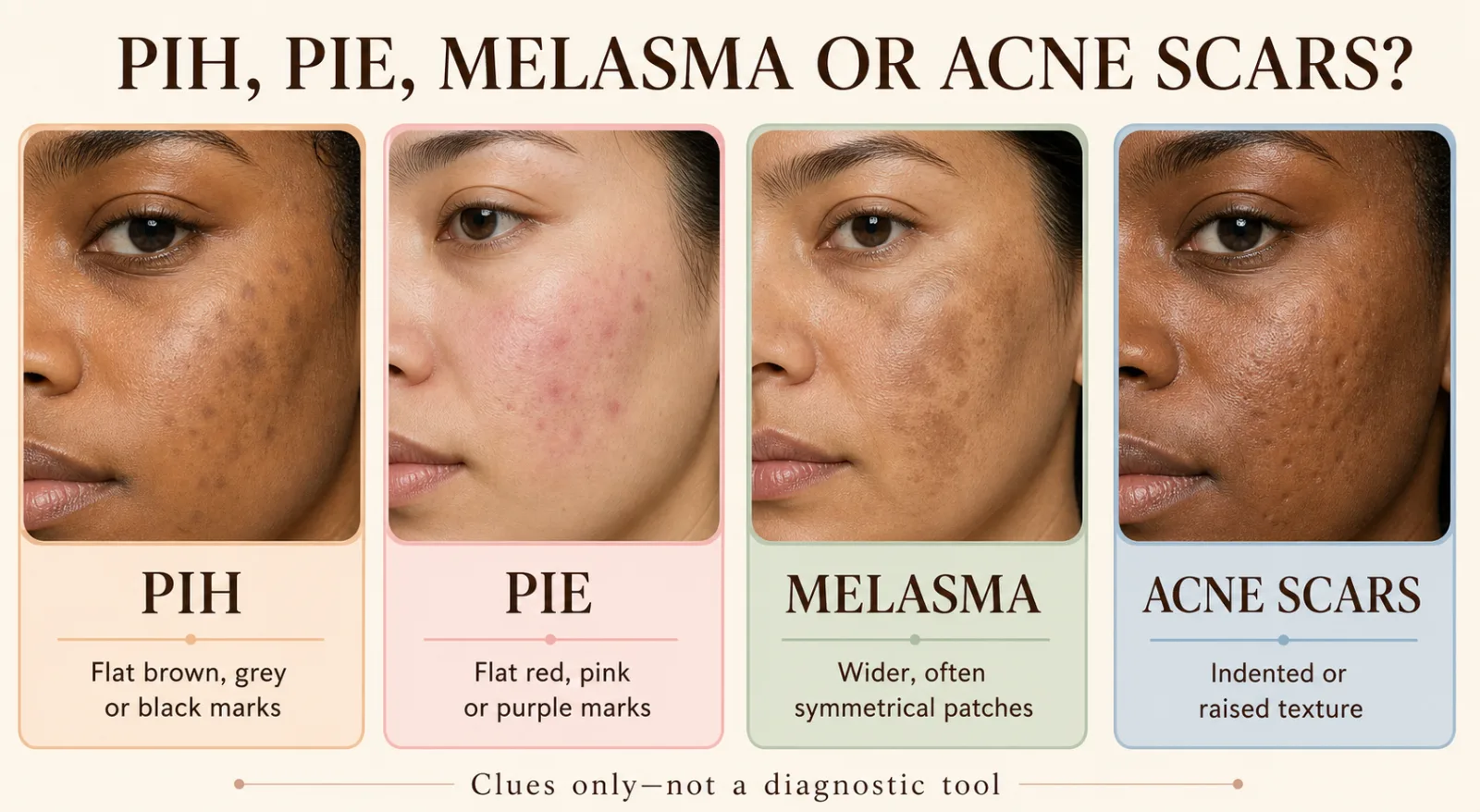
These clues are useful, but they are not a diagnosis. More than one type of mark can appear at the same time.
PIH: Flat Brown, Grey or Black Marks
Post-inflammatory hyperpigmentation, or PIH, develops when inflammation triggers extra pigment production. It is especially common and persistent in deeper skin tones, although it can affect anyone.
Look for flat marks in the same places where spots have healed. The skin should not feel indented or raised.
What to use: daily sunscreen is essential. Azelaic acid, vitamin C, retinoids and carefully chosen exfoliating acids may gradually improve uneven tone. Start with one main treatment rather than layering several strong actives.
For a gentle starting point, try Anua Azelaic Acid 10 Hyaluron Redness Soothing Serum. For more targeted pigmentation care, consider Eucerin Anti-Pigment Dual Serum.
PIE: Flat Red, Pink or Purple Marks
Post-inflammatory erythema, or PIE, is colour left by changes in small blood vessels after inflammation. It may look pink or red on lighter skin and red, purple or dusky on deeper skin.
Because PIE is not excess pigment, strong brightening products are not always the most useful first step. The priority is often to reduce irritation, protect the skin barrier and prevent new breakouts.
What to use: azelaic acid can be a practical choice because it supports acne-prone skin while helping with visible redness. A calming serum such as Dr. Jart+ Cicapair Intensive Soothing Repair Serum can support a gentler routine.
Melasma: Wider, Often Symmetrical Patches
Melasma usually appears as wider brown or grey-brown patches, commonly across both cheeks, the forehead or upper lip. It may resemble PIH, but the broader and often symmetrical pattern is an important clue.
Sunlight and visible light can make melasma more noticeable, so sunscreen is part of treatment rather than an optional extra.
What to use: choose a broad-spectrum tinted sunscreen containing coloured pigments and apply it generously every morning. Eucerin Sun Pigment Control Tinted Light SPF50+ combines high protection with tint. A dermatologist can confirm melasma and discuss prescription options if over-the-counter care is not enough.
Acne Scars: A Change in Texture
True acne scars alter the skin’s structure. They may be narrow and deep, wider with defined edges, gently rolling, or raised above the surrounding skin.
Skincare can improve hydration, colour and overall skin quality, but it cannot completely fill an indentation or flatten a raised scar. Procedures such as microneedling, laser treatment, subcision, peels or injections need to be selected for the individual scar type and skin tone by an appropriately qualified professional.
Which Route Fits Your Skin?
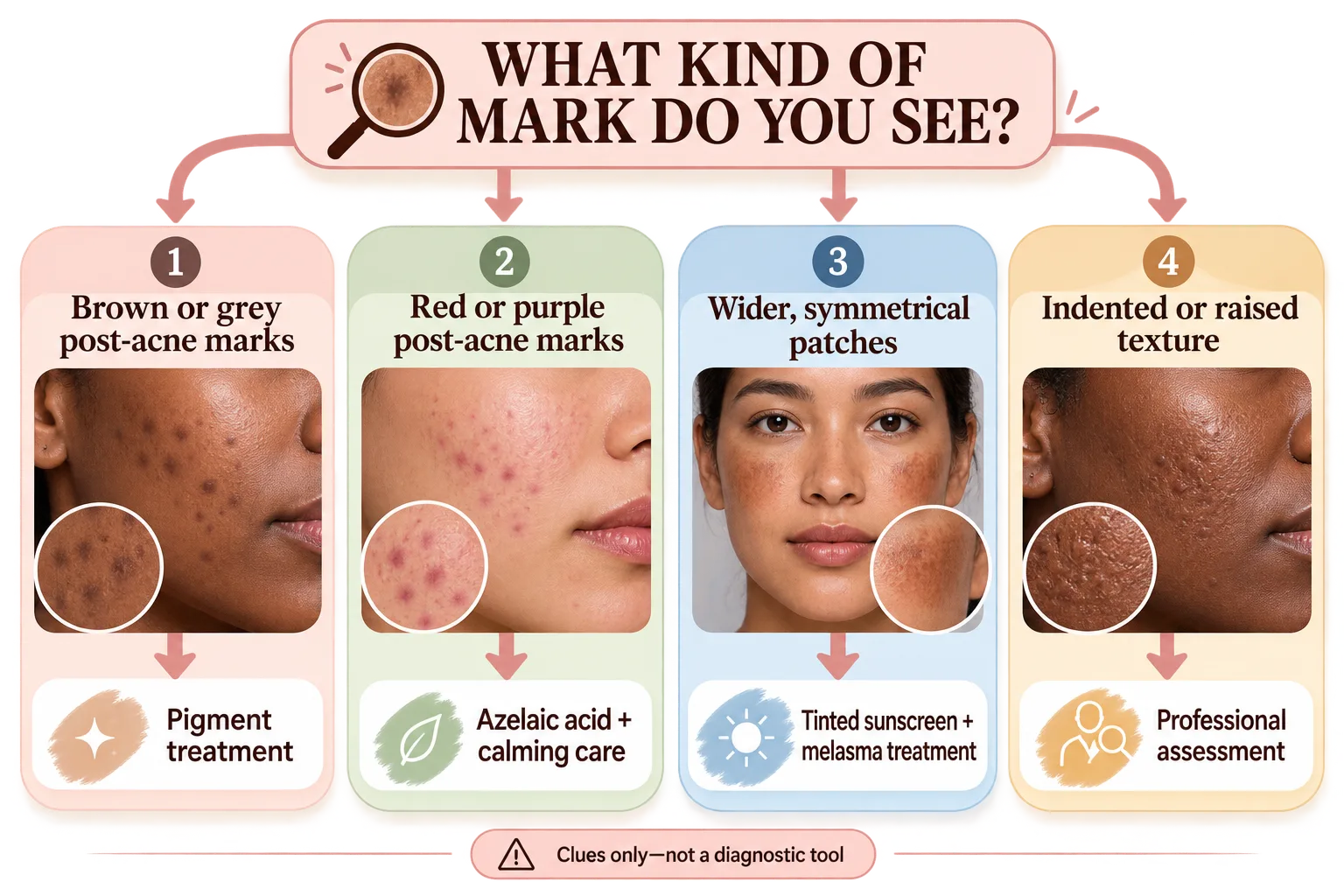
A Simple Routine for Flat Marks
Morning
- Gentle cleanser.
- Azelaic acid, vitamin C or another pigment treatment—choose one.
- Moisturiser if needed.
- Broad-spectrum SPF 30 or higher; choose a tinted formula when pigmentation or melasma is the priority.
Evening
- Gentle cleanser.
- One main treatment, such as azelaic acid or a retinoid.
- Moisturiser.
Avoid introducing several active ingredients at once. Irritation can prolong redness and make pigmentation more noticeable. Add one product gradually, watch how your skin responds and keep the rest of the routine simple.
When to Seek Professional Advice
See a GP or dermatologist if pigmentation changes rapidly, has an unusual shape or colour, or appears without a clear trigger. Professional advice is also worthwhile for persistent melasma, painful or ongoing acne, raised scars and indented scars.
Not sure which products fit your skin? Take the Radiant Eden Skincare Routine Quiz for a personalised starting point.
Sources
- American Academy of Dermatology: How to fade dark spots in darker skin tones
- American Academy of Dermatology: Melasma treatment
- DermNet: Post-inflammatory hyperpigmentation
- DermNet: Acne scarring
This article provides general information and is not a diagnosis. Consult a GP, dermatologist or other appropriately qualified professional for individual advice.
Related products
Frequently asked
Is PIH the same as an acne scar?+
How can I tell PIH from PIE?+
Can skincare remove indented acne scars?+
What is the most important product for melasma and dark marks?+
Find your perfect skincare routine
Answer a few questions and we'll tailor Radiant Eden's picks to you.
Build my skincare routineKeep reading
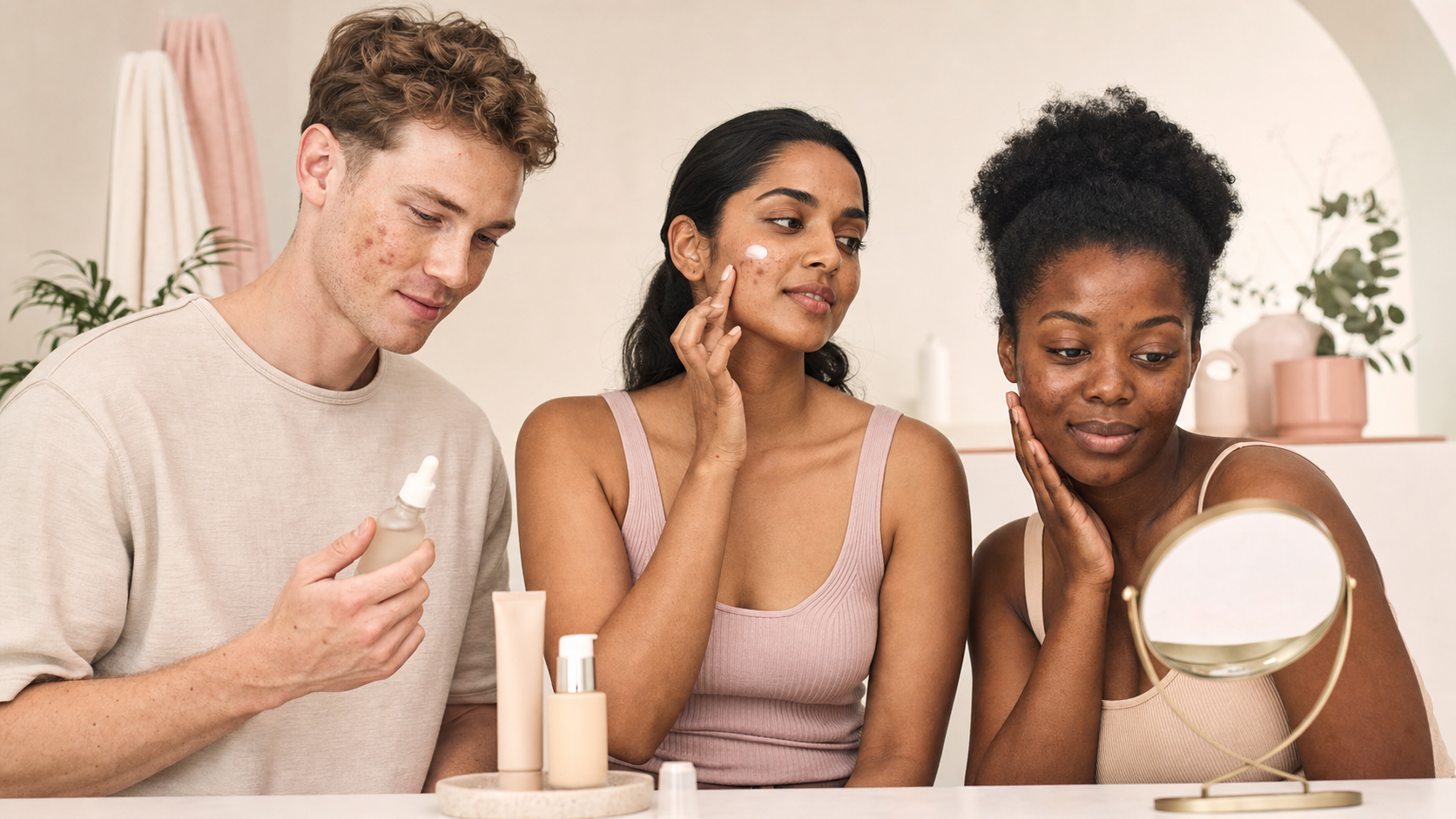
The Best Routine for Hyperpigmentation and Post-Acne Dark Spots
A calm, evidence-based routine for post-acne dark spots and hyperpigmentation: how to tell PIH, PIE, melasma and acne scars apart, and how to build a simple AM/PM routine around one active.
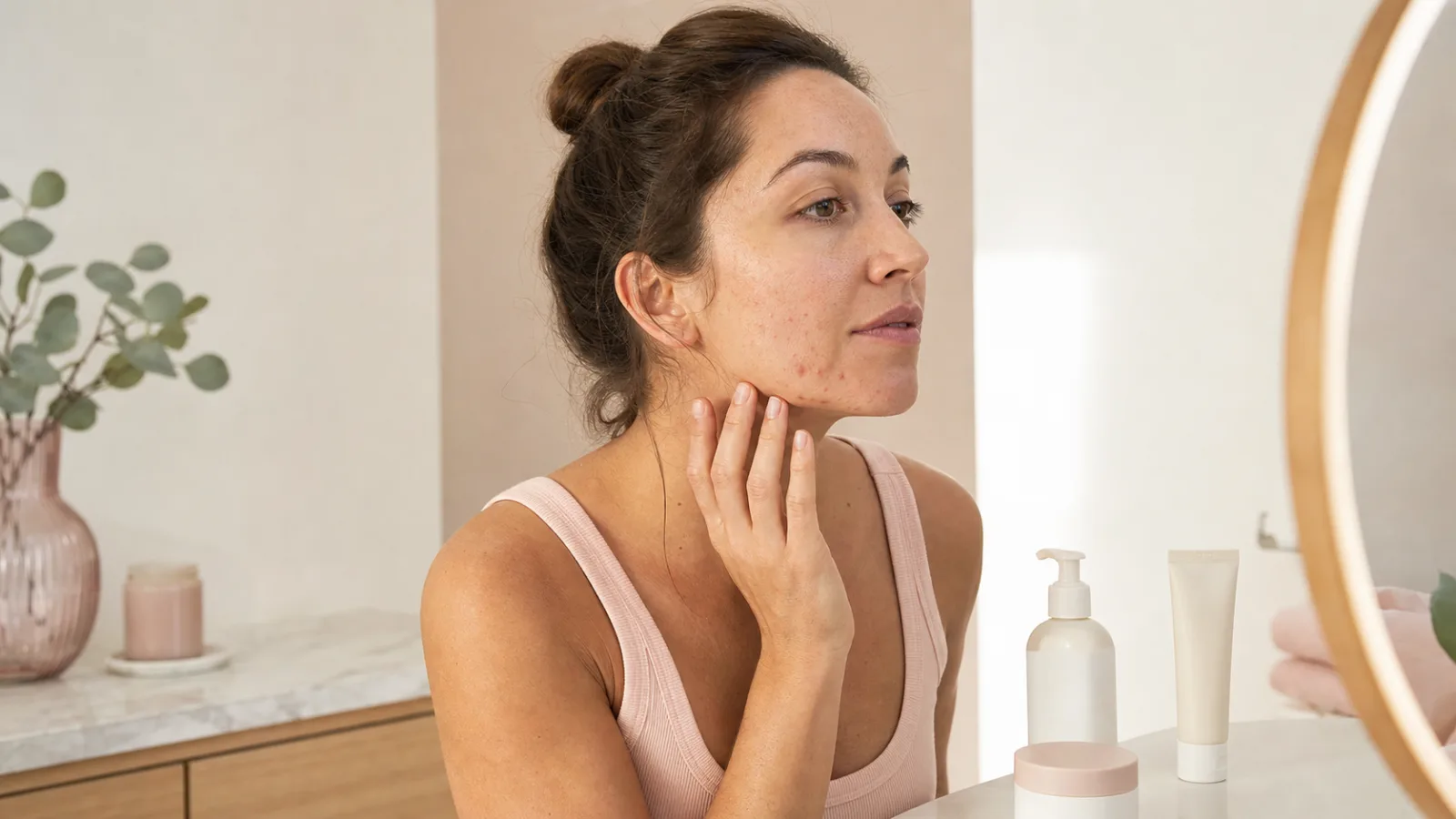
Adult Acne Skincare Routine: What to Use and What to Avoid
Build a simple adult-acne routine for clogged pores, hormonal breakouts and inflamed spots using benzoyl peroxide, salicylic acid, retinoids or azelaic acid.
How to Build a Simple Skincare Routine for Your Skin Type
Build a simple skincare routine with the right cleanser, treatment, moisturiser and sunscreen for dry, oily, combination or sensitive skin.