Protein Overload vs Moisture Overload: Signs and How to Fix Your Hair
How to recognise stiffness, overconditioning and structural damage—and reset your routine.
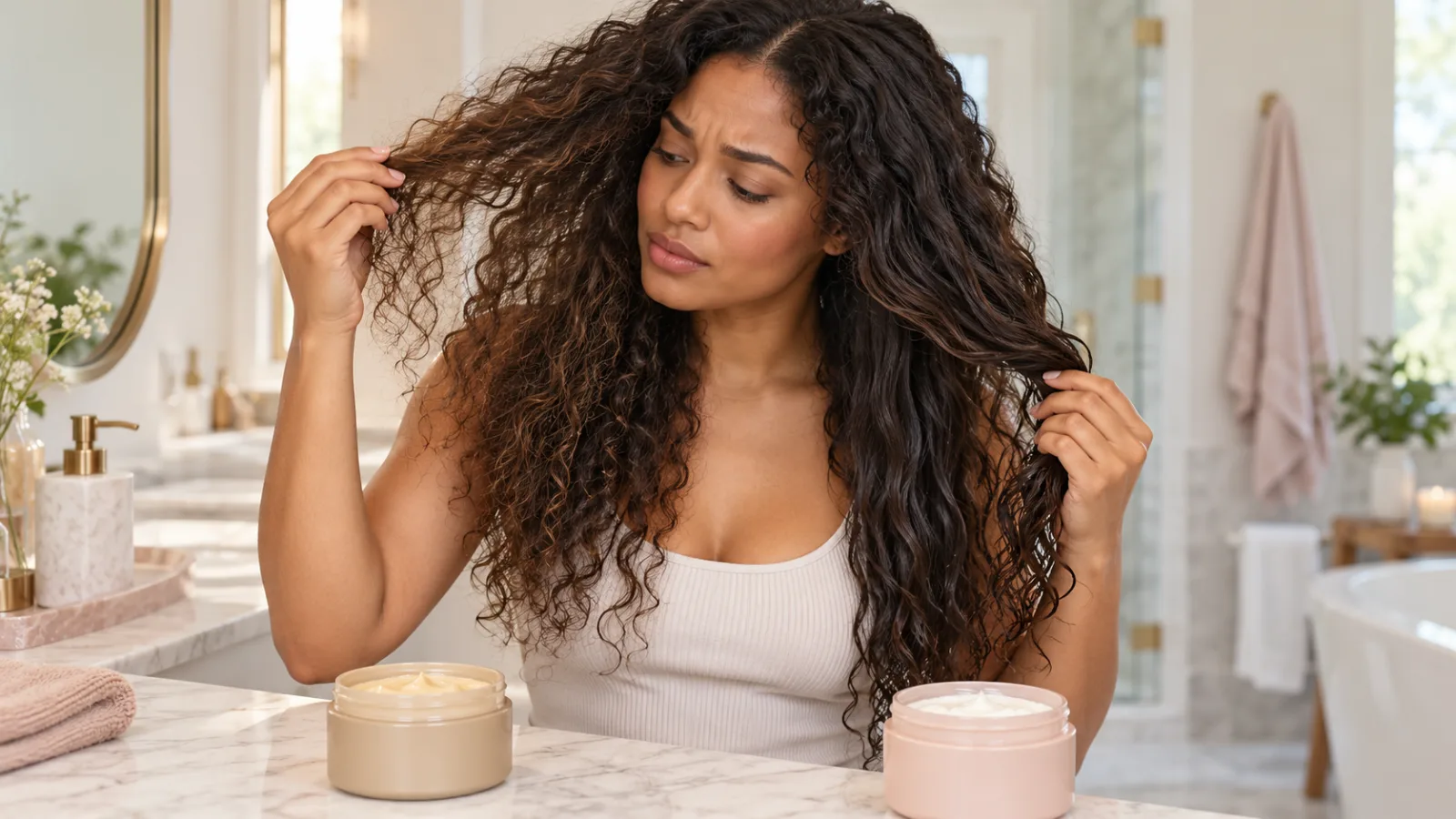
Learn how to distinguish too much strengthening support from overconditioning, product build-up and structural hair damage—and reset your routine.
If your hair suddenly feels stiff, limp, coated or unusually fragile, it is easy to blame “protein overload” or “moisture overload”. These are useful haircare terms, but they are not formal diagnoses—and the same symptoms can also come from product build-up, chemical damage or simply using a formula that is too heavy for your strands.
The safest approach is to look at how your hair behaves, simplify your routine and change one product at a time.
The Quick Answer
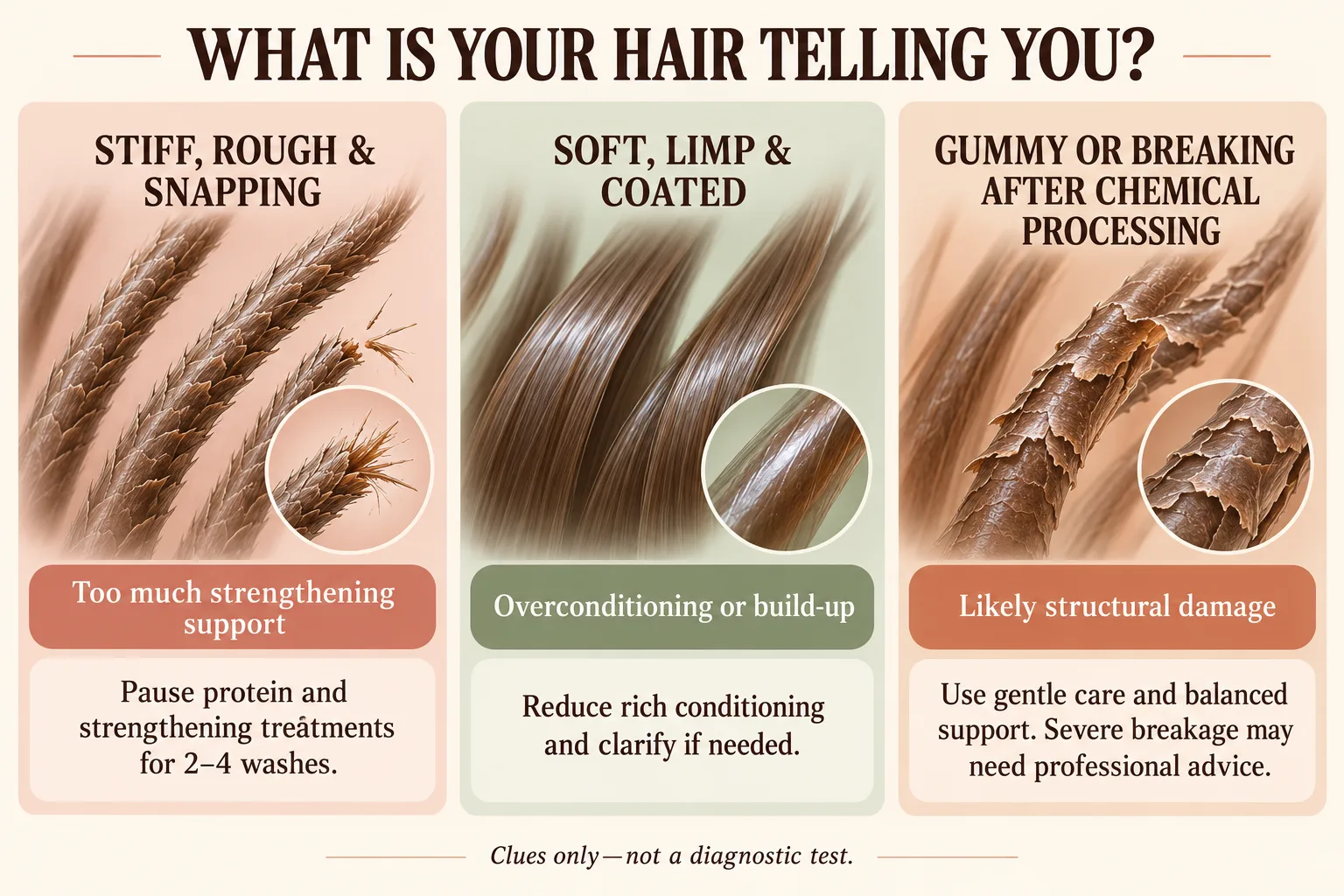
Your hair may be getting too much strengthening support if it feels increasingly stiff, rough and brittle after repeated use of protein-rich or strengthening treatments.
Your hair may be overconditioned or coated if it feels excessively soft, limp, heavy or unable to hold a style after frequent masks and rich leave-ins.
However, hair that becomes gummy, unusually stretchy or breaks after bleaching is more likely to be significantly damaged, not simply “too moisturised”.
What People Call Protein Overload
Hydrolysed proteins and amino acids can temporarily reinforce damaged areas of the hair fibre and improve strength. They cannot permanently rebuild living hair because the visible strand is made from dead cells, but they can improve how damaged hair feels and behaves. Research on hair-conditioning ingredients supports the temporary strengthening effect of appropriately sized protein fragments.
You may be using strengthening products too frequently if:
- Your hair feels rigid rather than flexible.
- It becomes rougher after a protein mask or strengthening treatment.
- Strands snap with very little stretch.
- Detangling becomes more difficult.
- Your ends feel hard, dry or straw-like despite regular conditioning.
Protein is not automatically harmful to low-porosity or fine hair. These strands may simply need a smaller amount or less frequent use.
How to fix it
Pause dedicated protein and strengthening treatments for two to four washes. Use a straightforward shampoo followed by a moisturising conditioner or protein-free mask.
Do not try to correct the problem by layering several masks, oils and leave-ins at once. This can create build-up and make it harder to tell whether your hair is improving.
Good options from the Radiant Eden database include:
- TGIN Rose Water Hydrating Hair Mask, a protein-free, relatively lightweight choice for low-porosity hair. Start with a small amount on fine strands.
- Olaplex Rich Hydration Mask, a richer moisture-focused option for medium or coarse dry hair.
- Matrix Food For Soft Conditioner, useful when you need softness but do not need another intensive strengthening treatment.
What People Call Moisture Overload
Hair does not literally become overloaded with moisture in the way the phrase suggests. In practice, people are usually describing overconditioning, excess product residue or a routine that is too rich for their strands.
Possible signs include:
- Hair feels very soft but lacks strength or bounce.
- Curls and waves lose definition unusually quickly.
- Fine hair looks flat soon after washing.
- Strands feel coated, waxy or difficult to rinse clean.
- Hair stretches more than usual when wet.
- The style will not hold, even though the hair does not feel dry.
Very stretchy or gummy hair following bleach, relaxers, permanent colour or repeated heat exposure may indicate structural damage. Water can enter damaged hair more easily, while chemical processing can weaken the cuticle and cortex. This is not something that can be corrected simply by avoiding conditioner. Research on chemically damaged hair explains how these processes alter strength, water absorption and the hair surface.
How to fix it
Begin with a thorough shampoo to remove residue. If your hair still feels coated, use an appropriate clarifying shampoo rather than immediately adding a protein treatment.
For the next few washes:
- Replace your mask with a normal rinse-out conditioner.
- Apply conditioner mainly from the mid-lengths to the ends.
- Reduce the amount of leave-in, cream and oil.
- Follow the recommended processing time.
- Assess the result only after your hair is completely dry.
If the hair remains unusually weak after the coating has been removed, introduce one balanced or strengthening product.
Suitable options include:
- Briogeo Don’t Despair, Repair! Deep Conditioning Mask, combines conditioning with moderate strengthening support.
- Moroccanoil Restorative Hair Mask, a more strengthening-focused choice for weakened, damaged medium or coarse hair.
- Philip Kingsley Moisture Balancing Conditioner, a lighter conditioner with hydrolysed proteins for fine or medium strands that do not need a rich mask.
Try This Simple At-Home Check
Do not rely on a single wet-strand stretch test. Results vary with water, existing damage and how hard you pull.
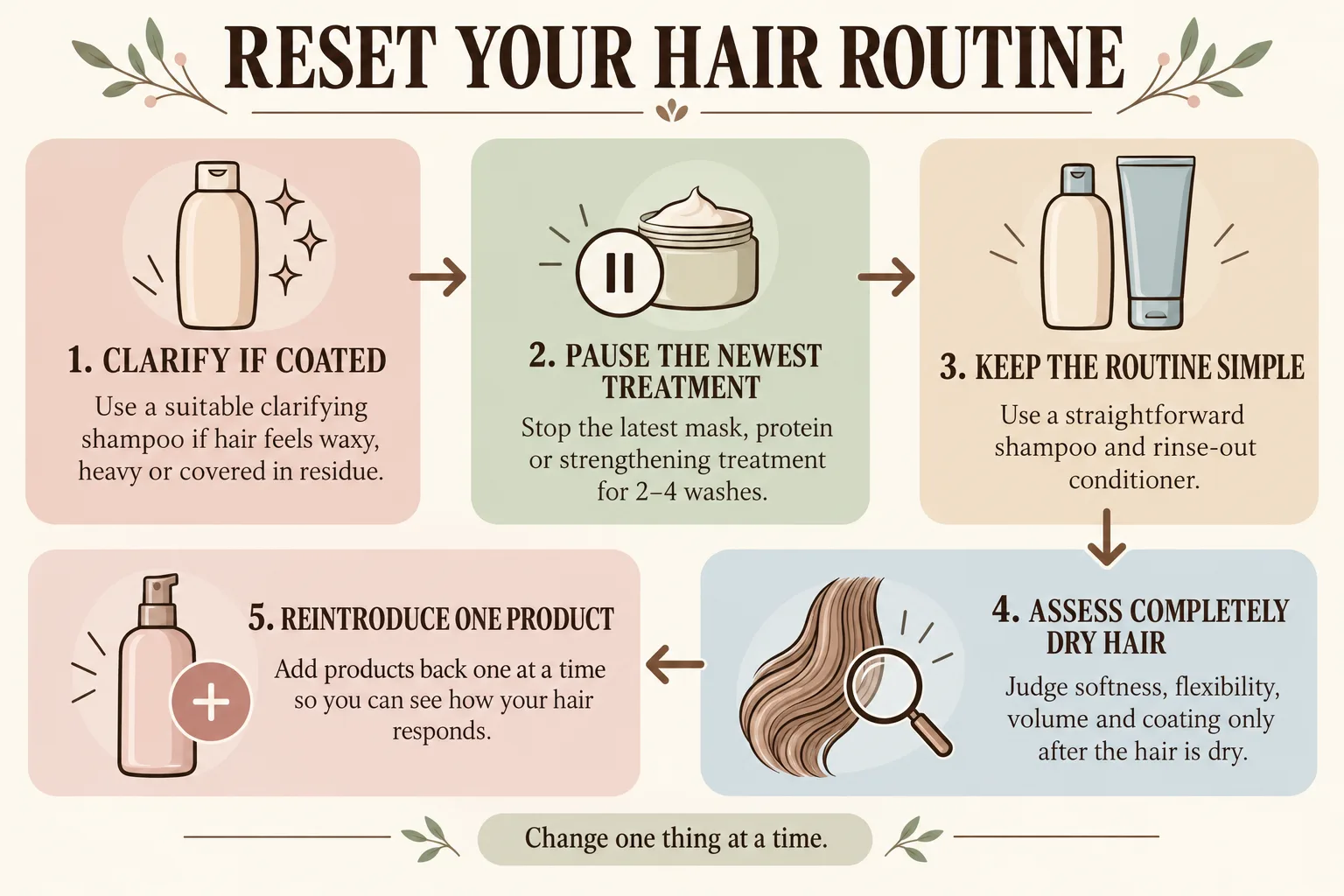
Instead:
- Clarify if the hair feels coated.
- Pause your newest mask or treatment for two to four washes.
- Use a simple shampoo-and-conditioner routine.
- Assess your hair once it is completely dry.
- Reintroduce only one treatment at a time.
If your hair improves when strengthening products are removed, use them less frequently. If it improves after reducing rich conditioning products, your routine was probably too heavy.
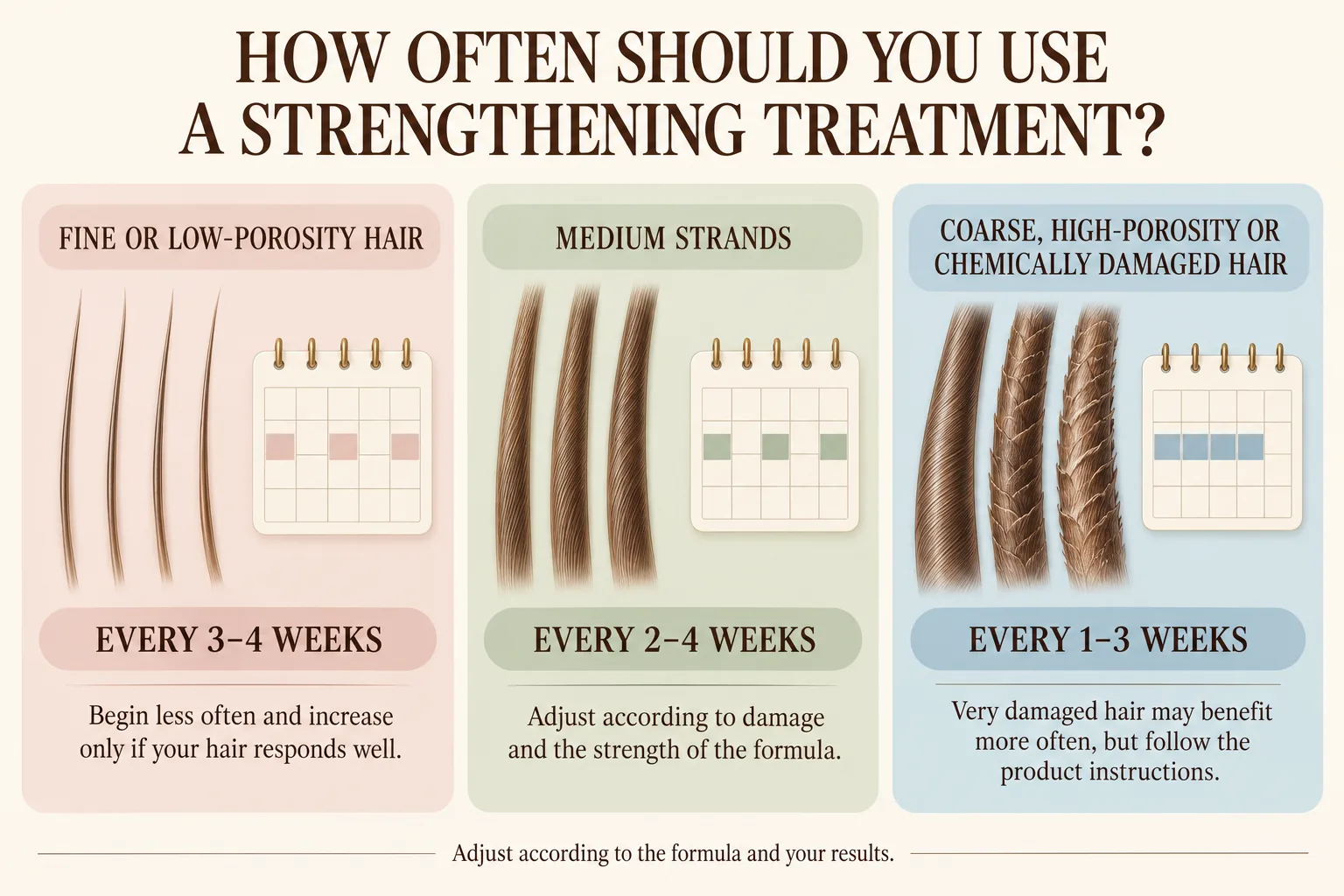
How Often Should You Use Strengthening Treatments?
A sensible starting point is:
- Fine or low-porosity hair: every three to four weeks.
- Medium strands: every two to four weeks.
- Coarse, high-porosity or chemically damaged hair: every one to three weeks, depending on the formula.
- Severely bleached or breaking hair: follow the product instructions and alternate strengthening support with adequate conditioning.
These are starting points, not fixed rules. Your hair’s condition and response matter more than whether it is straight, wavy, curly or coily.
When It Is Probably Damage, Not “Overload”
Seek professional advice if you notice rapidly increasing breakage, thinning, bald patches, scalp pain or hair breaking close to the root.
Damaged hair is fragile, and conditioning can reduce friction and breakage, but cosmetic products cannot permanently reverse severe structural damage. The American Academy of Dermatology recommends gentler handling and professional assessment when breakage continues.
The Bottom Line
Stiff and brittle hair may need a break from frequent strengthening treatments. Limp, coated hair usually needs less product, less frequent masking or a more thorough cleanse. Gummy, severely weakened hair is more likely to be chemically or mechanically damaged.
Simplify first. Then choose either moisture, balanced conditioning or strengthening support according to your hair’s condition, strand thickness and porosity, not its curl pattern.
Related products


Frequently asked
How can I tell whether my hair has too much protein?+
Is moisture overload a real diagnosis?+
Does gummy hair mean moisture overload?+
How often should I use a strengthening treatment?+
Find your perfect haircare routine
Answer a few questions and we'll tailor Radiant Eden's picks to you.
Build my haircare routineKeep reading

Protein or Moisture? How to Choose the Right Hair Mask
Learn whether your hair needs a protein, moisturising or balanced mask, with practical recommendations for different strands and damage levels.

Why Your Hair Mask Leaves Your Hair Coated, Greasy or Still Dry
Find out why a hair mask can leave your hair coated, greasy, flat or still dry—and how to adjust the product, amount and technique.
Hair Porosity Explained: How to Test It and Choose the Right Products
Learn how to assess hair porosity without relying on the float test, then choose product weight and protection for your strands.

How Often Should You Use a Hair Mask? A Guide by Hair Type and Damage Level
Learn how often to use a hair mask based on strand thickness, porosity and damage, without leaving your hair flat, greasy or coated.